This article presents the perspectives offered by the mother tincture of Artemisia annua for the therapeutic treatment of several diseases.
Introduction
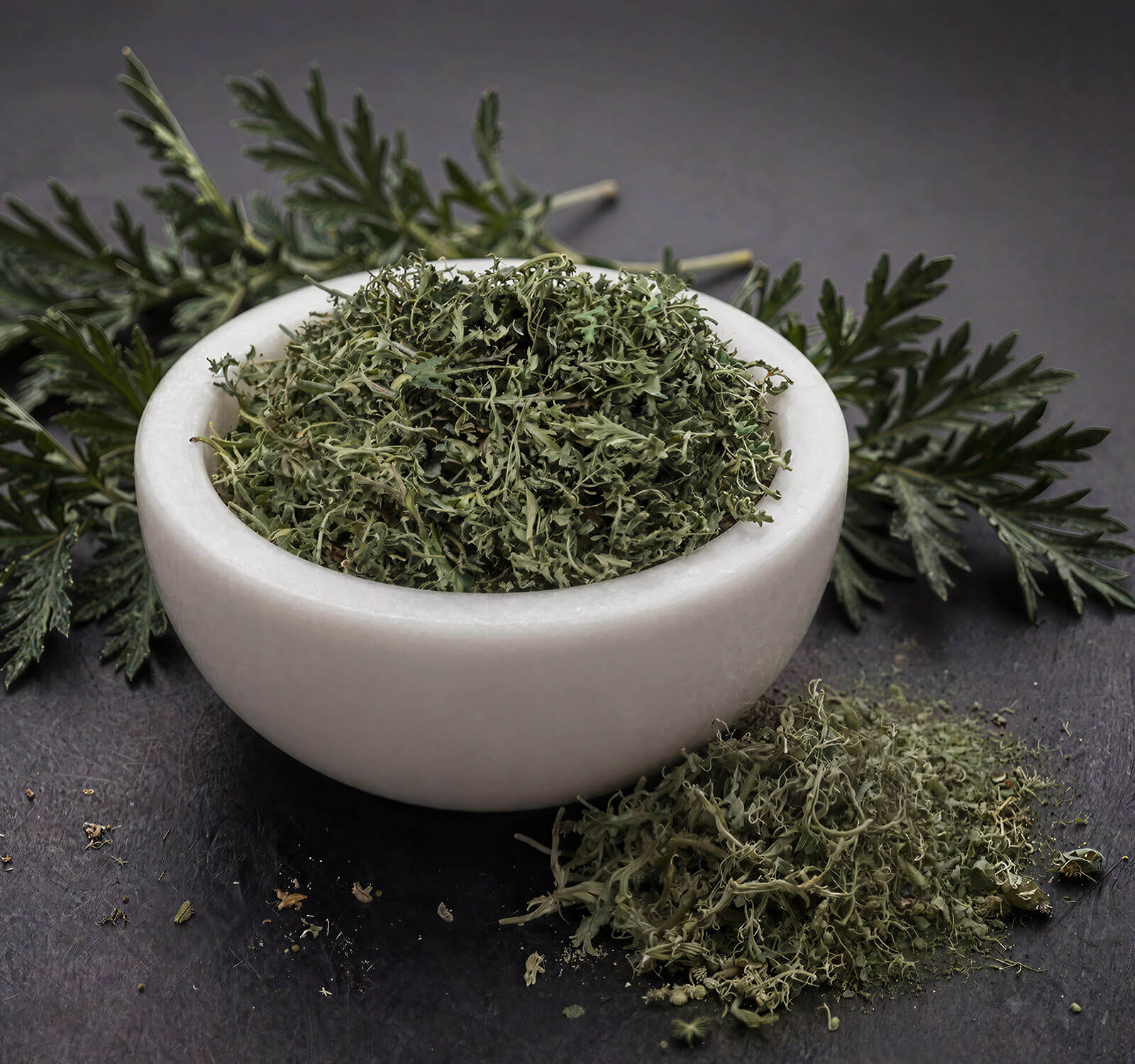
Artemisia annua has been used for centuries to treat fevers and malaria. After the discovery of artemisinin in 1971, the plant paved the way for other treatments in the fight against malaria. The mother tincture is a product obtained by macerating the dried or fresh leaves of the plant in a hydro-alcoholic liquid. This preparation allows for better preservation and standardization of the active compounds than traditional infusions. Beyond its action against the parasite responsible for malaria, artemisinin and its derivatives — notably artesunate, artemether or dihydroartemisinin — demonstrate a wide range of biological activities that open numerous perspectives in the fight against other pathologies.
Malaria: The Starting Point
Combination therapies (ACT) derived from artemisinin are treatments recommended by the WHO. The cure rates in the use of traditional preparations of the plant show variable rates ranging from 71% to 100% depending on the preparation and the duration of treatment. The WHO encourages research to find the most effective combination therapies.
Perspectives in Cancer
The anticancer activity of artemisinin-based molecules constitutes the most studied subject for cancer treatment. These molecules cause selective oxidative stress in iron-rich tumor cells, which sends a signal to the cells to trigger their self-destruction. This biological process is called apoptosis. Cytotoxic effects have been demonstrated on many types of cancer, including breast, lung, colon, liver and pancreatic cancer. The selectivity of Artemisia annua molecules against cancer cells could reduce side effects compared to classical chemotherapies but also potentiate the action of conventional treatments.
Perspectives in Inflammatory and Autoimmune Diseases
Dihydroartemisinin exhibits anti-inflammatory activity by attenuating the production of the enzyme responsible for cell inflammation, thereby reducing inflammatory cytokines. Studies on the subject open perspectives in the fight against rheumatoid arthritis, inflammatory bowel diseases, lupus and osteoarthritis. A randomized trial demonstrated a significant and substantial reduction in pain in patients with osteoarthritis. The compounds of Artemisia annua could offer a healthy alternative to corticosteroids, providing better tolerance.
Perspectives in Other Parasitic Diseases
Artemisinins also show activity against protozoa (single-celled bacteria) responsible for many tropical diseases, including leishmaniasis, Chagas disease and trypanosomiasis (sleeping sickness). The plant’s compounds could offer alternatives to conventional treatments due to their low cost and low toxicity, particularly for neurological forms that are resistant to classical medications.
Perspectives in Viral Diseases
The antiviral activity of Artemisia annua molecules has been demonstrated in in vitro studies, notably against cytomegalovirus, herpes, hepatitis B and C, and more recently SARS-CoV-2. The mechanism of action of the molecules is multiple: they inhibit viral replication, modulate the immune response and induce cell death in infected cells. Clinical evidence, however, remains in the laboratory phase and requires in vivo studies that are still lacking.
Perspectives in Neurology and Neuroprotection
Several artemisinin derivatives cross the blood-brain barrier, which opens numerous hopes in the fight against neurodegenerative diseases. In cases of Alzheimer’s and Parkinson’s, artemisinins induce protection of cells through the reduction of oxidative stress, the inhibition of protein aggregation and the reduction of neuroinflammation. Other promising avenues are currently being studied, notably in the fight against multiple sclerosis and strokes (cerebrovascular accidents).
Perspectives in Metabolic Medicine
Animal studies have suggested that in type 2 diabetes, artemisinin reduces blood glucose and improves glucose tolerance. These results suggested that the molecule could have beneficial effects on obesity, the balance of different fat levels (lipids) and non-alcoholic hepatic steatosis. The studies thus pave the way toward complementary treatments for the management and treatment of metabolic syndrome.
Conclusion
The mother tincture of Artemisia annua thus constitutes a source of therapeutic hope that goes well beyond the treatment of malaria: cancer, inflammatory diseases, parasitoses, viral infections, neurological pathologies and metabolic disorders. These perspectives must remain measured by the fact that randomized clinical studies are lacking to establish the efficacy and dosage of these treatments, and they are not the priority of current pharmaceutical companies’ research. However, we can note that the history of Artemisia annua demonstrates the importance of traditional medicine as a source of inspiration for modern medicine.
Notes & References
-
Systematic review of Artemisia annua tea for malaria treatment in Africa. Bulletin of the National Research Centre, 2026 (accessed September 2, 2026).
-
Assogba Médess. Étude sur l’efficacité clinique de la tisane d’Artemisia annua. Thèse d’exercice, Pharmacie, 2020 (accessed September 2, 2026).
-
The plant matrix of Artemisia annua L. for the treatment of malaria: Pharmacodynamic and pharmacokinetic studies. PMC, 2025 (accessed September 2, 2026).
-
Klayman DL. Qinghaosu (artemisinin): an antimalarial drug from China. Science, 1985 (accessed September 2, 2026).
-
Memorial Sloan Kettering Cancer Center. Artemisia annua – Purported Benefits, Side Effects & More. 2026 (accessed September 2, 2026).
-
Antimalarial and anticancer properties of artesunate and other artemisinins: current development. PMC, 2021 (accessed September 2, 2026).
-
Artemisia annua, a Traditional Plant Brought to Light. Europe PMC, 2020 (accessed September 2, 2026).
-
Efferth T, et al. The antiviral activities of artemisinin and artesunate. Clinical Infectious Diseases, 2008 (accessed September 2, 2026).
-
Ho WE, et al. Artemisinins: pharmacological actions beyond anti-malarial. Pharmacology & Therapeutics, 2014 (accessed September 2, 2026).
-
Li J, et al. Artemisinin and its derivatives as a repurposing anticancer agent. Journal of Experimental & Clinical Cancer Research, 2020 (accessed September 2, 2026).