This article addresses the theme of the use of Artemisia annua in the fight against mosquito invasions in the texts of ancient China
The fumigation of Artemisia annua in the fight against mosquitoes: a little-known page of ancient China
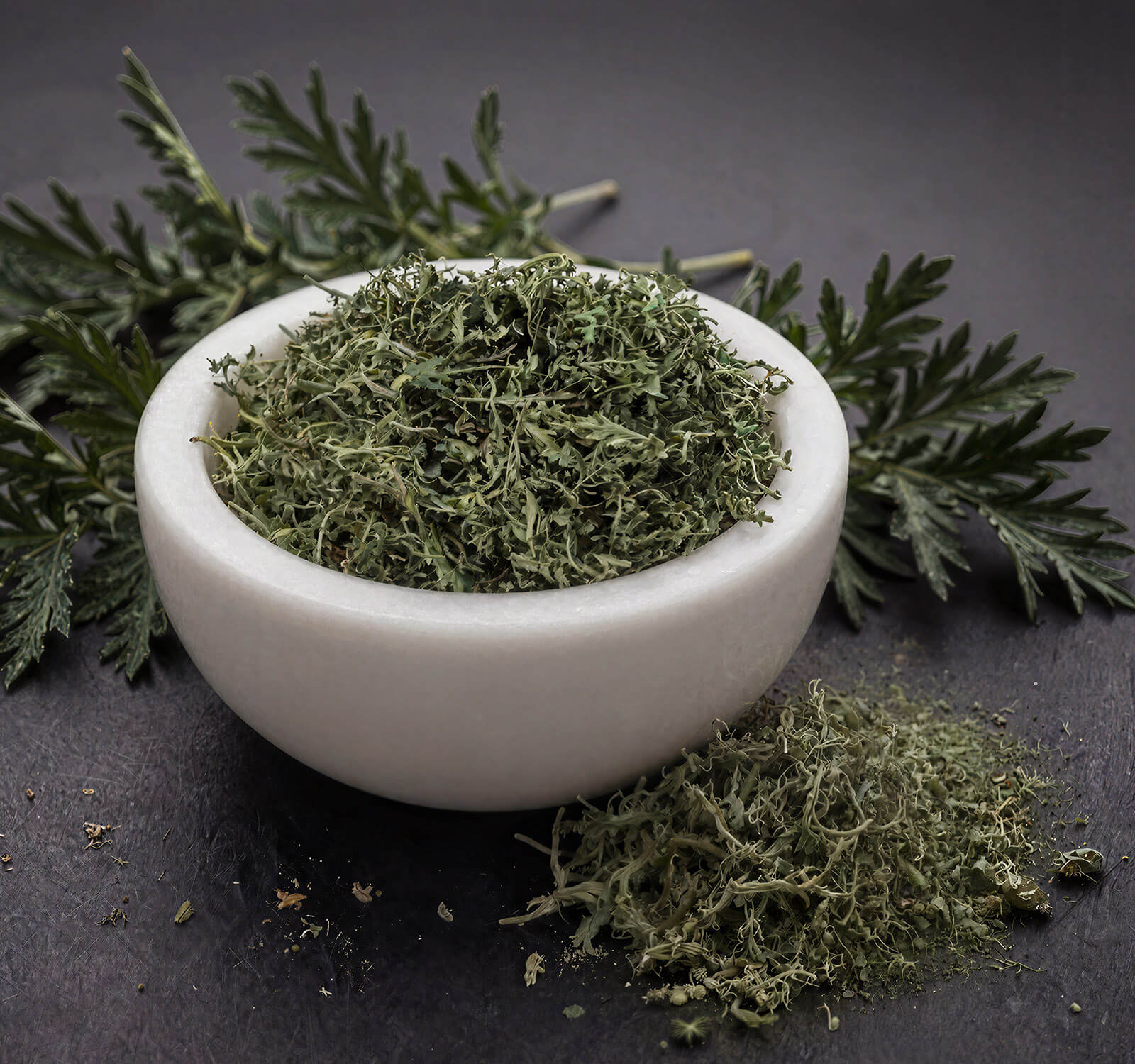
Artemisia annua is better known in our time for its main compound, artemisinin. It is less known for the use made of it in ancient China as a repellent against mosquito invasions. The use of the plant thrown into a fire in order to obtain a smoke that repels mosquitoes is attested in numerous ancient treatises. These attest to practices and medicinal traditions in the use of Artemisia in the history of China. These practices disappeared with the arrival of modern means of mosquito control and have made it a practice that is today little known in the history of the plant in ancient China.
“Burning the mugwort”, “pulling up the hao”
The historical sources that directly mention qinghao (the Chinese name of Artemisia annua) are scattered and the plant is often confused with the genus Artemisia as a whole. There are, however, sources concerning the use of the plant as a fumigation product, notably among Chinese scholars. The Song poet Lu You (1125–1210), in his work Fumigation against mosquitoes, after the manner of Mr Wanling, writes: “The marshland is indeed full of mosquitoes, swarming at night to the point of strangeness. Driving them off with the hands neither removes nor repels them; making the Artemisia smoke brings brief relief.” This excerpt depicts a scene of daily life that highlights the use of the plant in combustion for the purpose of driving away mosquitoes.
Another description of this use has come down to us through Fang Xiaoru (1357–1402), a scholar of the Ming dynasty, who in his work Dialogue with the mosquitoes describes a scene in which “a servant pulls up the hao (the Artemisia), binds it into a bundle, sets fire to one end; its smoke rises thick; he waves it left and right, goes around the bed several times, and drives the mosquitoes out of the door.” Thus many Chinese scholars recommended using the plant and its smoke to repel and fight mosquitoes.
We can also discover that prototypes of chemical mosquito nets had been made by the Chinese in the Middle Ages and in Antiquity. Treatises describe how to braid Artemisia plants and then hang them from beams on which the plants were burned with the arrival of summer and mosquito invasions. These accounts bear witness to this type of use of Artemisia in ancient China.
Contemporary academic literature
In current academic literature, there is a chapter of a work on the history of Artemisia and Chinese medicine. This chapter demonstrates the use of the plant as fuel for fumigations for the purpose of fighting mosquito invasions. It further explains that this tradition would gradually disappear with the appearance of more modern means of control linked to the second industrial revolution, namely the chemical revolution. Indeed, the work states that “the leaves of Artemisia annua were burned in ancient China as a fumigant insecticide to kill mosquitoes, but this practice is no longer in use today, because more effective anti-mosquito devices have been developed and marketed.” We may note here that it was solely the evolution of technique that brought about the disappearance of the use of the plant as a repellent, and that it was in no way the rejection of an ancient method.
Fumigation in the context of ancient practices
The fumigation of Artemisia as a repellent against insects is not an isolated practice. Since Antiquity, the Chinese have used plants as a means of fumigation for the purpose of repelling insects. Some scholars moreover recommended mixing several plants in preparations to increase the effectiveness of these repellents. Thus Pu Songling, in his Song for driving away mosquitoes, recommends mixing several herbs, notably atractylis, jing and thistle.
The main idea behind these practices was that mosquitoes fear smoke and certain odours. The thick smoke of the fumigations, as well as the fragrances given off, drove mosquitoes away from dwellings.
According to Chinese philosophical and religious beliefs, notably in connection with Confucianism, the fight against insects should be limited to repelling pests and not to harming or killing them. Indeed, according to these beliefs, harmony with nature was an essential value and respect for this nature was defined by tradition as a “coexistence between beings”.
Notes &
references
Primary sources
-
Fang, Xiaoru 方孝孺. “Wen dui” 蚊對 [Dialogue with the mosquitoes]. In Xunzhi Zhai Ji 遜志齋集. Edition of the free library Wikisource. https://zh.wikisource.org/wiki/蚊對 (accessed 28 October 2026).
-
Lu, You 陸游. “Xun wen xiao Wanling xiansheng ti” 熏蚊效宛陵先生体 [Fumigation against mosquitoes, after the manner of Mr Wanling]. Cited in Renmin Ribao (overseas edition), 21 September 2016, and in Baike Baidu, entry “熏蚊效宛陵先生体”. http://paper.people.com.cn/rmzk/html/2016-09/21/content_1716000.htm (accessed 28 October 2026); https://baike.baidu.com/item/熏蚊效宛陵先生体 (accessed 28 October 2026).
-
Pu, Songling 蒲松龄. “Qu wen ge” 驱蚊歌 [Song for driving away mosquitoes]. Cited in Renmin Wang – Culture, 8 August 2013. http://culture.people.com.cn/n/2013/0808/c172318-22493545.html (accessed 28 October 2026).
Secondary sources
-
Yu, Hongwen, and Shouming Zhong. “Artemisia Species in Traditional Chinese Medicine and the Discovery of Artemisinin.” In Artemisia, edited by Colin W. Wright, 2nd ed. London: Taylor & Francis, 2001. https://doi.org/10.1201/9780203303061-16 (accessed 28 October 2026).
-
Renmin Ribao (overseas edition). “Gudai qufu zhong de ‘quwen shu’” 古代曲赋中的“驱蚊术” [Anti-mosquito techniques in ancient poems and tales]. 21 September 2016. http://paper.people.com.cn/rmzk/html/2016-09/21/content_1716000.htm (accessed 28 October 2026).
-
Baike Baidu. “Wen yan” 蚊烟 [Mosquito smoke]. https://baike.baidu.com/item/蚊烟/6583987 (accessed 28 October 2026).</span