Artemisia annua has a history spanning several millennia, demonstrating the interest the plant has generated from ancient times to the present day.
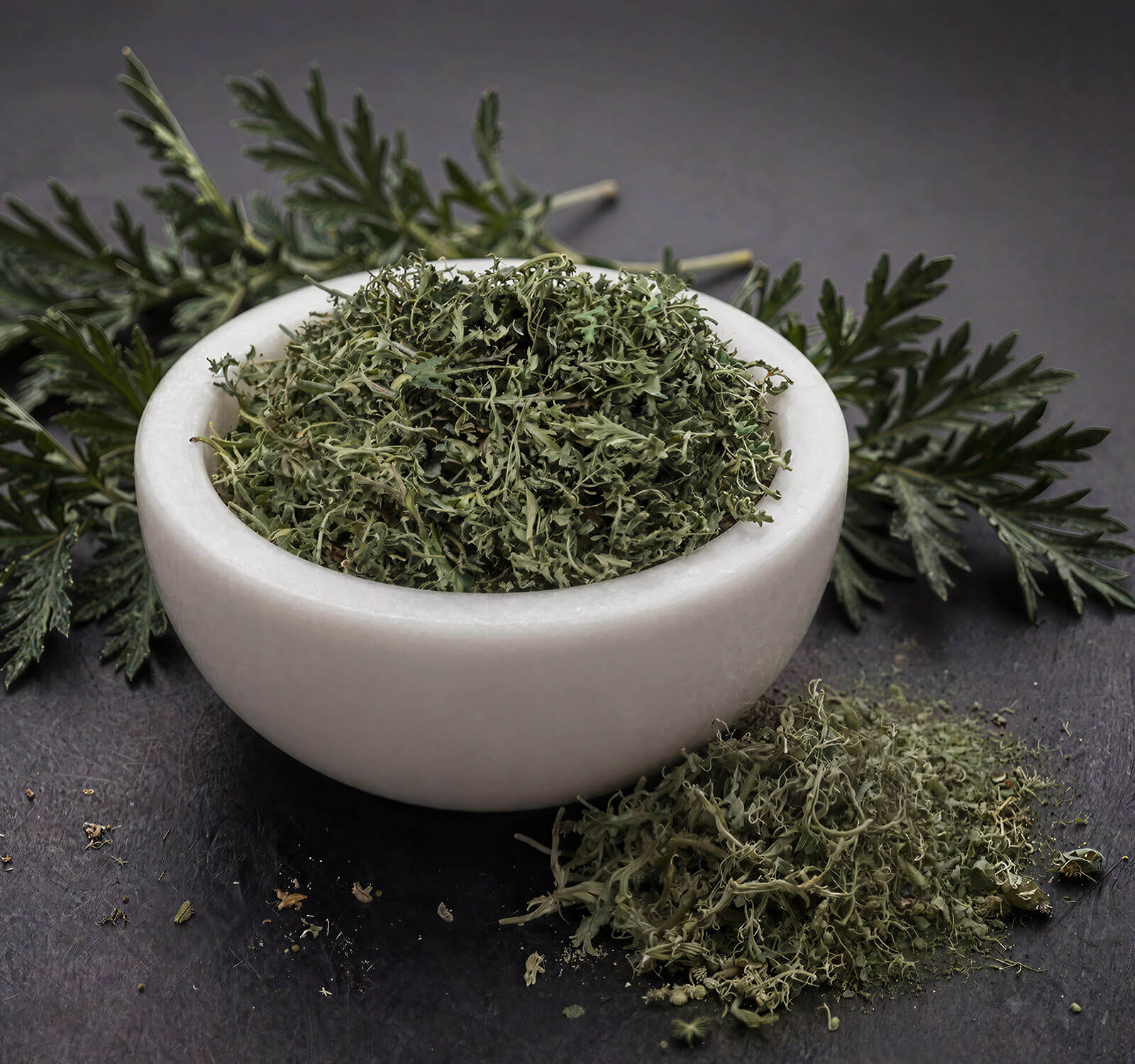
Artemisia annua, also known as annual wormwood, is a medicinal plant whose use dates back several millennia in Asia. Called qinghao (青蒿) in China, this plant has been traditionally used as a treatment for fevers and malaria in Chinese medicine. This ancient knowledge led to the discovery of its most important active compound: the artemisinin molecule. This article summarizes the history and journey of this plant in China and surrounding regions, focusing on the major discoveries concerning its numerous active compounds that followed.
Traditional use and first mentions
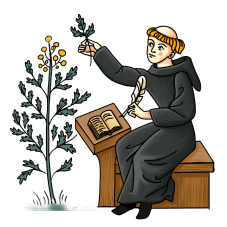
The first written mentions of Artemisia annua date back to the Han Dynasty (206 BCE – 220 CE) in the Shennong Bencao Jing, a Chinese medical treatise, which indicates its use for “eliminating heat and treating intermittent fevers.” The plant was thus primarily used to treat fevers as well as digestive disorders.
The first detailed description of the plant appears in an emergency medicine manual, the Zhouhou Bieji Fang by the scholar Ge Hong (283–343 CE), the author who would later become the source of the discovery of the artemisinin molecule. In this manual, the plant is recommended for treating fevers caused by malaria by macerating fresh Artemisia annua leaves in cold water to extract and drink the juice.
Rediscovery in the 20th century and identification of artemisinin
However, it was not until the 1960s that the plant experienced a resurgence of interest. Following the development of resistance to chloroquine, the main drug used to treat malaria, the Chinese government launched “Project 523” to initiate research into new treatments based on traditional Chinese medicine knowledge.
The first results of this research were not long in coming, and in 1971, a team of researchers from the Academy of Traditional Chinese Medicine, led by researcher Tu Youyou, identified Artemisia annua as a promising plant in the fight against the disease. After hundreds of trials to isolate the plant’s components, in 1972, the major active compound of the plant was isolated and identified: artemisinin. This discovery led Tu Youyou to receive the Nobel Prize in Medicine in 2015.
Discovery of other active compounds
Subsequently, many other active compounds with medicinal properties were discovered:
Flavonoids (1980–2000)
These molecules have been studied for their synergistic effects with the artemisinin molecule present in Artemisia annua:
-
Artemetin: an active compound with antioxidant and anti-inflammatory properties.
-
Casticin: an active compound with antimalarial effects.
-
Chrysosplenetin: an active compound that potentiates artemisinin.
In the 1990s, several Chinese studies suggested that certain flavonoids allowed for better bioavailability of the artemisinin molecule in humans, thus enabling a reduction in the necessary doses.
Other terpenes and essential oils
-
Dihydroartemisinin: a derivative of artemisinin for which preclinical phase trials in cancer treatment are underway.
-
Artemisinic acid: a semi-synthetic precursor of artemisinin that could eventually enable the large-scale production of artemisinin.
-
Camphor and limonene: molecules present respectively in camphor and citrus essential oils with antibacterial effects.
Recent discoveries (2000s–2020s)
Recent research, particularly conducted in China and Korea, has revealed several potential and promising benefits of the plant for the human body:
-
Certain polysaccharides (carbohydrate polymers) present in Artemisia annua stimulate immunity.
-
Several synthetic derivatives of the plant have been developed, including artesunate, to improve the effectiveness of treatments against cancers and viral diseases.
Conclusion
Artemisia annua is the quintessential example of the richness of the Chinese pharmacopoeia. Its unique journey has taken it from a plant used traditionally in Chinese medicine to a Nobel Prize-winning discovery of its active molecule, artemisinin. Subsequently, it has continued to inspire new research, given its great potential for human health. Current studies focus on the treatment or improvement of treatments for cancer and viral infections. The historical importance of this plant is no longer in doubt and also demonstrates the invaluable contribution of Chinese medicine to medical research.
Notes &
references
- TU, Youyou, « The Discovery of Artemisinin (qinghaosu) and Gifts from Chinese Medicine » in Nature Medicine, vol. 17, n° 10, 11 octobre 2011, p. 1217-1220. DOI : https://doi.org/10.1038/nm.2471. [En ligne] https://jipmerlibrary.ovidds.com/resolver/full?rft.genre=article&rft_id=info%3adoi%2f10.1038%2fnm.2471 (Consulté le 8 mai 2025).
- WEATHERS, Pamela J., JORDAN, Nikole J., LASIN, Praphapan, et TOWLER, Melissa J., « Simulated Digestion of Dried Leaves of Artemisia annua Consumed as a Treatment (pACT) for Malaria » in Journal of Ethnopharmacology, vol. 151, n° 2, février 2014, p. 858-863. DOI : https://doi.org/10.1016/j.jep.2013.11.043. [En ligne] https://searchworks.jioinstitute.edu.in/articles/asx__94047176 (Consulté le 8 mai 2025).
- GE, Hong (葛洪), Zhouhou Beiji Fang (《肘后备急方》 – Manuel de médecine d’urgence), rédigé originalement entre 283 et 343 apr. J.-C. Édition de référence : Zhouhou Beiji Fang, Shanghai : Shanghai guji chubanshe, 1987. [En ligne] https://franklin.library.upenn.edu/catalog/FRANKLIN_9936299693503681 (Consulté le 8 mai 2025).
- WANG, Yunmo (王筠默), et WANG, Hengfen (王恒芬), (éd.), Shennong Bencao Jing Jiaozheng (《神农本草经校证》), Changchun : Jilin kexue jishu chubanshe, 1988. [En ligne] https://catalog.princeton.edu/catalog/9930996823506421 (Consulté le 8 mai 2025).