Artemisia annua possesses a large number of active molecules that have seen a resurgence of research in recent decades, demonstrating its potential for human health and disease treatment.
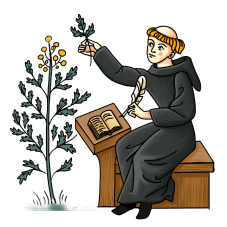
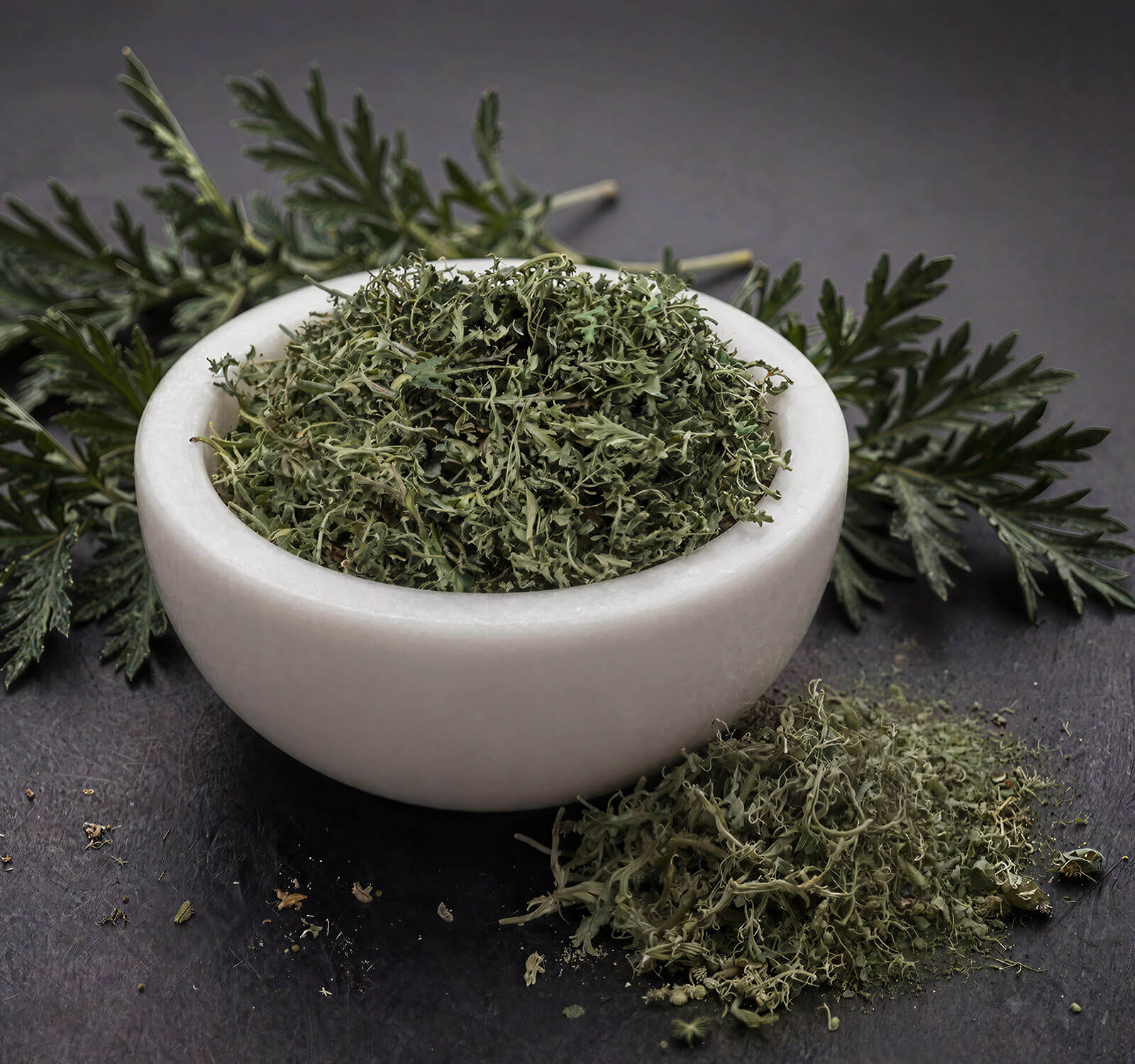
Artemisia annua is a medicinal plant native to Asia that is now cultivated on five continents. For about five decades, the plant has experienced a resurgence of interest following extensive in-depth research into its active components. Indeed, Artemisia annua contains a variety of active compounds that have demonstrated significant therapeutic potential for human health. It also contains polyphenols and essential oils.
Major active compounds and their composition
The best-known active compound of Artemisia annua is artemisinin. Discovered in the 1970s, this molecule has been the subject of extensive research since then. The plant also contains a significant number of flavonoids (secondary metabolites of vascular plants), including luteolin, quercetin, casticin, artemetin, and many others. In addition to all these components, Artemisia annua also possesses phenolic acids, polysaccharides, saponins, and coumarin.
Antimalarial properties
Artemisinin, the plant’s major molecule, is now used in antimalarial treatments recommended by the WHO. This active compound generates free radicals upon contact with iron, which destroys parasites present in the blood. Through the combined action of flavonoids naturally present in the plant, the effectiveness of artemisinin is increased by 50%, extending the molecule’s action due to their long half-life.
Anticancer effects
Recent research has shown a cytotoxic effect of artemisinin on specific iron-rich cancer cells. Thus, effects have been observed on cancers of the prostate, pancreas, breast, liver, brain, and colon. As stated earlier, the presence of iron triggers the release of intracellular free radicals, which tend to destroy tumor cells. These studies were based on experiments on animal or cellular models that showed a significant reduction in tumor size of up to 50%.
Antioxidant and protective properties
The other molecules contained in the plant, particularly polyphenols and flavonoids, are known to be powerful antioxidants. They help combat cellular oxidative stress, which is involved in cell aging. These antioxidants also help prevent and combat cardiovascular diseases, osteoporosis, and certain cancers. Luteolin is particularly known for its anti-inflammatory and anticancer properties.
Other potential benefits
Several studies have suggested that Artemisia annua helps stimulate natural defenses by strengthening the immune response against various infections, including emerging viruses.
Traditionally, the plant has been used for its purifying virtues (notably through fumigations) or tonifying properties (as an infusion or decoction).
Artemisia annua also possesses growth inhibition potential against certain unwanted plants, making it a promising natural bioherbicide.
Precautions and limitations
The use of Artemisia annua should nevertheless be done with caution. With prolonged use or overconsumption, there are risks of digestive, neurological (particularly for people with epilepsy), and cardiac disorders.
The plant is not recommended for pregnant or breastfeeding women.
Allergic or skin reactions may occur in sensitive individuals.
Conclusion
Artemisia annua possesses a great richness of active molecules distinguished by their complementarity (particularly between artemisinin and flavonoids). The plant has scientifically recognized properties against malaria, cancers, oxidative stress, and for immune stimulation. Although studies on humans still need to confirm its in vivo application, the plant is very promising for human health. Its use should be measured to avoid the risk of side effects, preferably under the guidance of health professionals such as doctors, homeopaths, herbalists, etc.
Notes &
references
- Agroscope. (s.d.). Artemisia annua – Einzelpublikation. IRA Agroscope. Auteurs : DELABAYS, N., WIRTH, J., BOHREN, C., MERMILLOD, G. et de JOFFREY, J.-P. Disponible sur : https://ira.agroscope.ch/en-US/Ajax/Einzelpublikation/Download?einzelpublikationId=21395 (Consulté le 8 octobre 2025).
- Aroma-Zone. (2025). Armoise annuelle (Artemisia annua) : définition, propriétés et bienfaits. Aroma-Zone. Disponible sur : https://www.aroma-zone.com/page/armoise-annuelle-definition-proprietes-bienfaits (Consulté le 8 octobre 2025).
- Basterrechea, B. (s.d.). Propriétés de l’armoise et contre-indications. Fundación René Quinton. Disponible sur : https://www.fundacionrenequinton.org/fr/blog/proprietes-de-l-armoise-et-contre-indications/ (Consulté le 8 octobre 2025).
- Gaubert, C. (2019). Question de la semaine : qu’est-ce que l’Artemisia et pourquoi l’OMS l’interdit-elle ? Sciences et Avenir. Disponible sur : https://www.sciencesetavenir.fr/sante/question-de-la-semaine-qu-est-ce-que-l-artemisia-et-pourquoi-l-oms-l-interdit-elle_137411 (Consulté le 8 octobre 2025).
- Guo, S., Shi, B., Xing, Y., Xu, Y., Jin, X., Hong, L., Zhang, S., Qiao, M. et Yan, S. (2024). Artemisia annua L. polysaccharide improves the growth performance and intestinal barrier function of broilers challenged with Escherichia coli. Frontiers in Microbiology, 15:1390815. doi: 10.3389/fmicb.2024.1390815
- Inserm (Institut national de la santé et de la recherche médicale). (2020). L’Artemisia, plante miracle, vraiment ? Canal Détox. Disponible sur : https://presse.inserm.fr/canal-detox/lartemisia-plante-miracle-vraiment/ (Consulté le 8 octobre 2025).
- Kokopelli Semences. (s.d.). Présentation de l’Artemisia. Blog Kokopelli. Disponible sur : https://blog.kokopelli-semences.fr/presentation-de-lartemisia/ (Consulté le 8 octobre 2025).
- Kokopelli Semences. (s.d.). Usages, préparation et posologies de l’Artemisia. Blog Kokopelli. Disponible sur : https://blog.kokopelli-semences.fr/usages-preparation-posologies/ (Consulté le 8 octobre 2025).
- La Maison de l’Artemisia. (s.d.). Artemisia – Présentation. Disponible sur : https://maison-artemisia.org/artemisia/ (Consulté le 8 octobre 2025).
- La Maison de l’Artemisia. (s.d.). Pharmacologie de l’Artemisia. Sciences & Innovations. Disponible sur : https://maison-artemisia.org/sciences-innovations/pharmacologie/ (Consulté le 8 octobre 2025).
- L’Essencier. (s.d.). Artemisia annua – Tisane. Disponible sur : https://essencier.ch/de/kraeutertees/4981-artemisia-annua-7640170964066.html (Consulté le 8 octobre 2025).
- Pagès, S. (s.d.). Artemisia annua : utilisation, bienfaits, posologie. Journal des Femmes Santé. Disponible sur : https://sante.journaldesfemmes.fr/fiches-sante-du-quotidien/2712441-artemisia-annua-utilisation-bienfaits-posologie/ (Consulté le 8 octobre 2025).
- Semences Dupuy. (s.d.). L’Artemisia annua : vraiment une plante miracle ? Blog Semences Dupuy. Disponible sur : https://www.semencesdupuy.com/blog/lartemisia-annua-vraiment-plante-miracle–n44 (Consulté le 8 octobre 2025).
- Serre Ô Délices. (2023). Absinthe Chinoise – Artemisia annua – Bio. Disponible sur : https://serreodelices.com/produit/absinthe-chinoise-artemisia-annua/ (Consulté le 8 octobre 2025).
- Wikipédia. (2005). Armoise annuelle (Artemisia annua). Wikipédia, l’encyclopédie libre. Disponible sur : https://fr.wikipedia.org/wiki/Armoise_annuelle (Consulté le 8 octobre 2025).
- Wikipédia. (2005). Artémisinine. Wikipédia, l’encyclopédie libre. Disponible sur : https://fr.wikipedia.org/wiki/Art%C3%A9misinine (Consulté le 8 octobre 2025).
- Zhu, X.X., Yang, L., Li, Y.J., Zhang, D., Chen, Y., Kmoníčková, E., et al. (2013). Effects of sesquiterpene, flavonoid and coumarin types of compounds from Artemisia annua L. on production of mediators of angiogenesis. Pharmacological Reports, 65(3): 410-418. doi: 10.1016/s1734-1140(13)71016-8. PMID: 23744425.